

CEO, Heritage Foods Ltd
There are three reasons to add a new book to one’s collection: uniqueness of perspective, the author’s depth of passion and expertise, and the value it creates for the reader. This book delivers convincingly on all three. India arguably produces the largest number of business and industry leaders, yet our leadership vocabulary and strategic mental models remain largely borrowed from the West—shaped by our B-school education and the books we read. Even the “ancient wisdom” we reflexively cite is drawn from The Prince or The Art of War. This is ironic, given that leadership is deeply rooted in cultural context, and we possess a rich body of insight through our own epics. This book decisively breaks that pattern by bringing Indian Knowledge Systems to the fore with clarity, rigour, and practical relevance. The case studies are rich, and the frameworks are immediately usable. A particularly powerful example that Anil brings out is the reframing of “grit” through the Ramayana concept of Dhriti—a blend of mental resilience, perseverance, and, most intriguingly, a sense of humour. That idea of “lightness in leadership” feels deeply Indian, intuitively right, and long overlooked. This is not a book of borrowed ideas or abstract philosophy. It is a grounded, culturally rooted leadership manual that every Indian manager and leader should own.

Professor of Leadership and Management, Tata Institute of Social Sciences, Mumbai
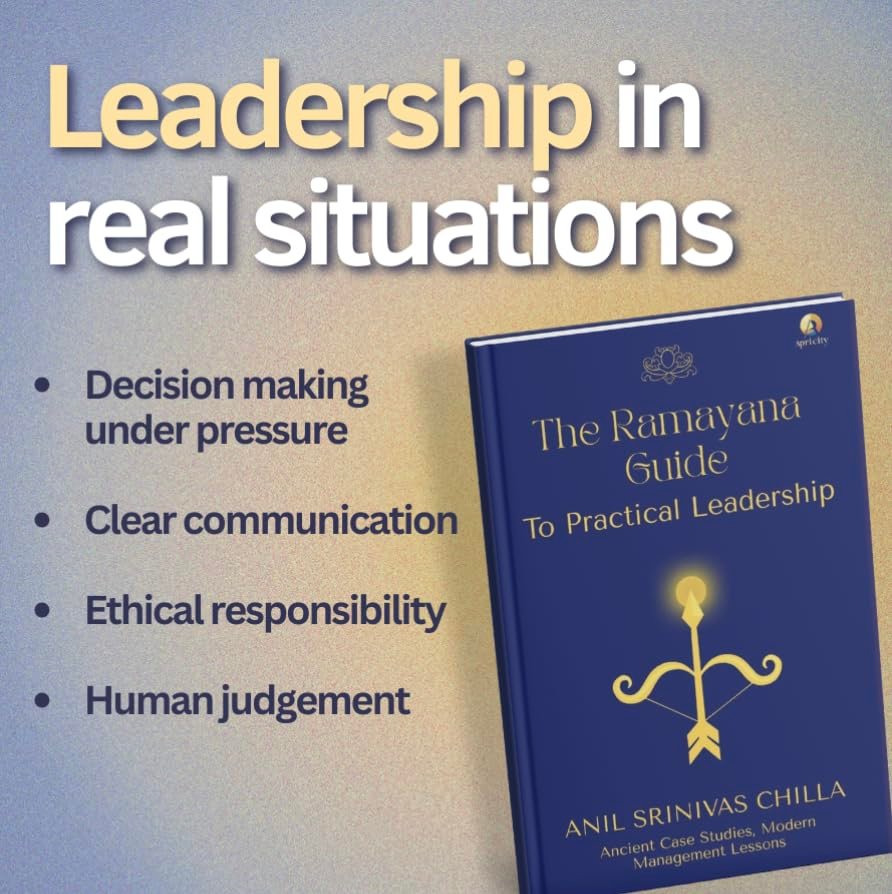
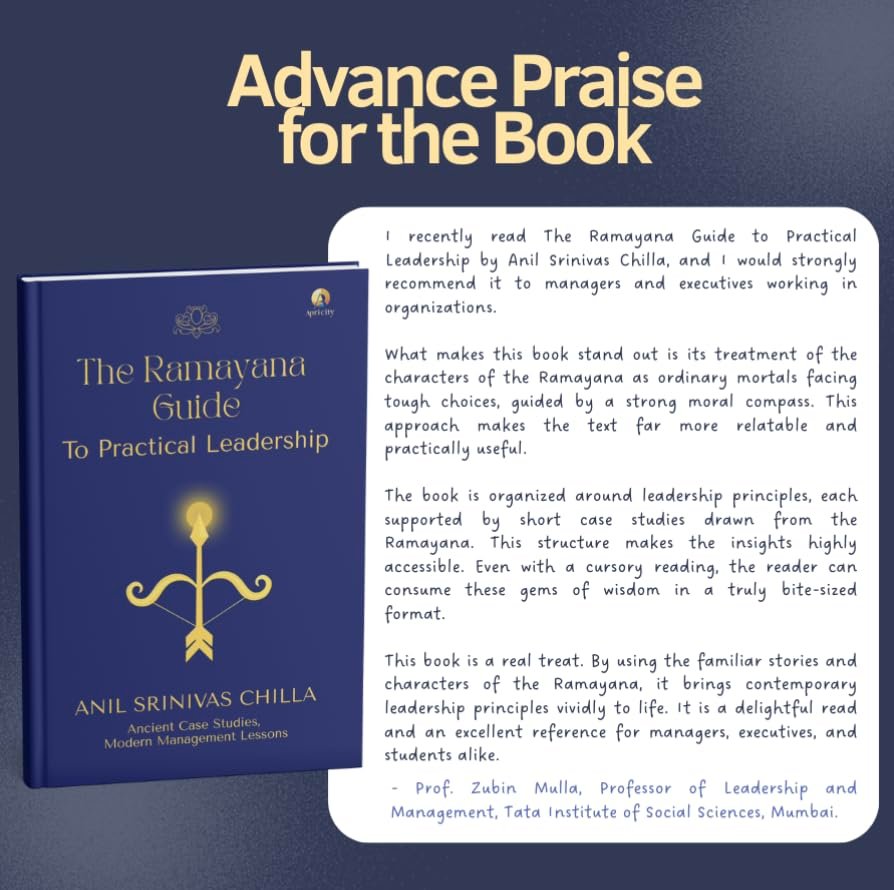
I recently read The Ramayana Guide to Practical Leadership by Anil Srinivas Chilla, and I would strongly recommend it to managers and executives working in organizations. What makes this book stand out is its treatment of the characters of the Ramayana as ordinary mortals facing tough choices, guided by a strong moral compass. This approach makes the text far more relatable and practically useful. The book is organized around leadership principles, each supported by short case studies drawn from the Ramayana. This structure makes the insights highly accessible. Even with a cursory reading, the reader can consume these gems of wisdom in a truly bite-sized format. This book is a real treat. By using the familiar stories and characters of the Ramayana, it brings contemporary leadership principles vividly to life. It is a delightful read and an excellent reference for managers, executives, and students alike.

Founding Director, Centre for Human Sciences, Rishihood University, Sonipat
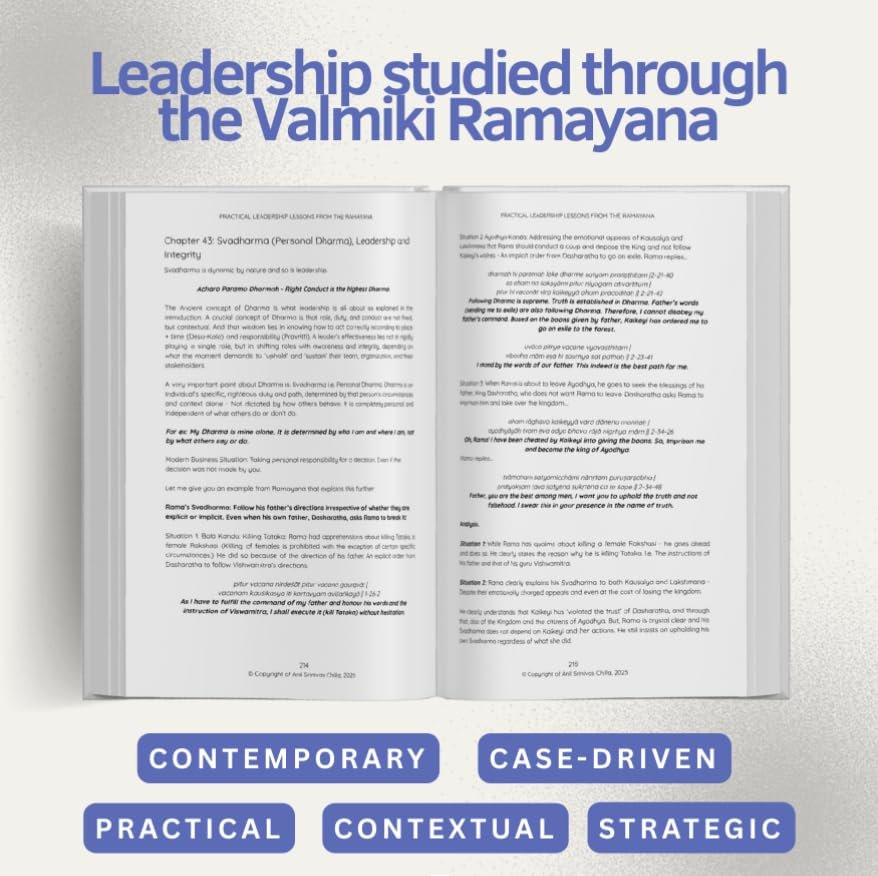
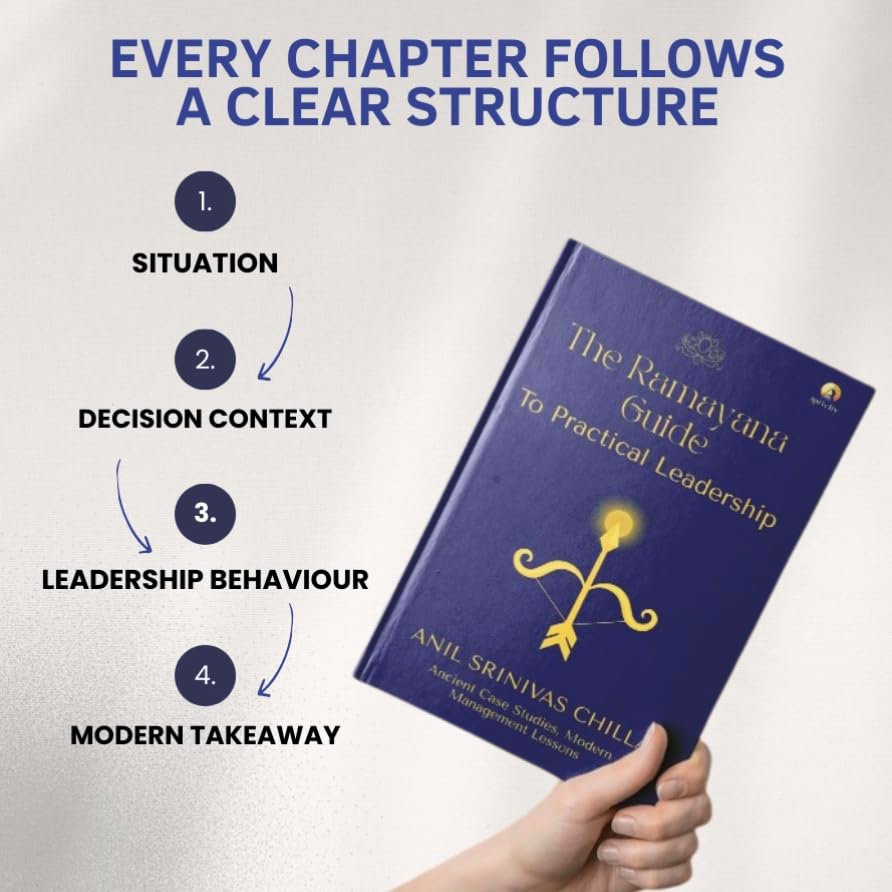
In "The Ramayana Guide To Practical Leadership", Anil Srinivas Chilla, an accomplished author, masterfully bridges the gap between ancient Indian Knowledge Systems (IKS) and the rigorous demands of modern management. Here he distills the Valmiki Ramayana into structured, actionable case studies—utilizing a ‘Situation, Analysis, and Takeaways’ methodology, and transforms an epic narrative into a sophisticated toolkit for the 21st-century professional. Whether exploring Hanuman’s mastery of concise communication or Rama’s frameworks for high-performance teams, this book offers a refreshing, values-based alternative to Western-centric leadership models. The author successfully demonstrates that principles like 'Dharma' and self-mastery are essential pillars for navigating today’s complex business landscape. This is an indispensable read for managers and students alike who seek to lead with both competence and conscience. It is a brilliant 'transcreation' that ensures ancient pearls of wisdom find their rightful, practical place in today’s boardrooms.
Former Sr. Vice President and Head of India and APAC, EXL Analytics
If you’re tired of recycled Western case studies, this is the leadership book you’ve been waiting for. Anil Srinivas Chilla’s The Ramayana Guide to Practical Leadership is a rare bridge. The book converts epic moments into modern boardroom lessons - strategy, stakeholder management, coaching, and courageous decision-making - without diluting the soul of the text. What makes this book stand out is its insistence that Dharma is not philosophy-on-a-pedestal, but a lived leadership framework. This book should be on the desk of every manager who wants to lead with clarity, courage, and conscience - without losing relevance in the age of AI.

Chair & Co-Founder, Intelstack
When someone like Anil, with extensive corporate leadership experience, writes a book like this, it’s worth paying attention. He brings real dilemmas and conversations from Ramayana to life, then analyses them through modern leadership lenses. I’m not a rituals or religious person, nor a self-help book guy, so I was happy to realise this book is none of those. I’m curious about ideas that have survived because they work. The nice thing is Anil doesn’t ask you to agree with everything. He invites you to observe, extract, and apply. That restraint builds credibility for me. From comms and coaching to high-performance teams, decision frameworks, and situational awareness, it’s structured like a leadership curriculum rather than a retelling of stories. What fascinated me is the breadth. It doesn’t just cover visible leadership skills like communication and strategy, but the harder, quieter ones: resilience, judgement, self-awareness (and now, with AI coming in, ethical trade-offs too). The book reads less like scripture and more like a practical field guide for leading in a volatile, high-pressure world.

IFS, Ambassador of India to Ireland
I am very delighted to learn about the publication of "The Ramayana Guidebook to Practical Leadership" by Mr. Anil Srinivas Chilla, a young, multi-faceted, tech and management professional. The initiative taken by Mr. Chilla is particularly significant in the context of the national vision and aspiration of building the Viksit Bharat founded on Bharatiya cultural and civilizational ethos and spirit of Vasudhaiva Kutumbakam. I heartily applaud and congratulate Mr. Chilla for taking up this important research and presenting the leadership skills and techniques based on Ramayana in simple, scientific manner for benefit of the emerging professionals. It is indeed a matter of great joy to see technocratic professionals like Mr. Chilla dedicating themselves to exploration of the glorious heritage of ancient Indian literary and philosophical treasures.

Founder & CEO, Verticurl (A WPP Company)
In an era where we chase AI, automation, and the next digital breakthrough, Anil's work reminds us that the most enduring leadership principles—clear communication, mental resilience, strategic thinking—were perfected thousands of years ago in the Ramayana. Having spent decades leading digital transformation and customer experience initiatives for global brands, I can attest that this ancient-modern synthesis is exactly what today's business leaders need to build high-performing teams and drive sustainable results in our hyper-connected world.
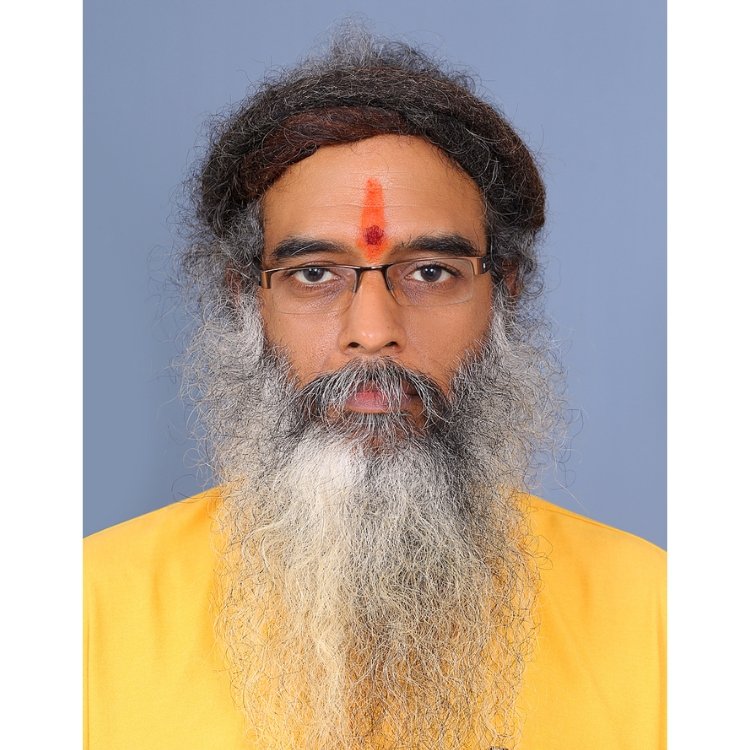
Co-Founder, Institute of Indic Wisdom
In “The Ramayana Guide To Practical Leadership: Ancient Case Studies, Modern Management Lessons,” Anil Srinivas Chilla makes the timeless wisdom of Sreemad Ramayana accessible to young leaders as well as students of management. By providing lessons, case studies and their relevance in modern contexts, Anil aids the assimilation and application of the leadership wisdom exemplified by Bhagawan Sree Rama, Sree Hanuman and others. The book's unique structure encompassing leadership foundations, and intermediate & advanced leadership skills renders it relevant and valuable for both emerging and practicing leaders, while leading oneself, leading others or leading teams.